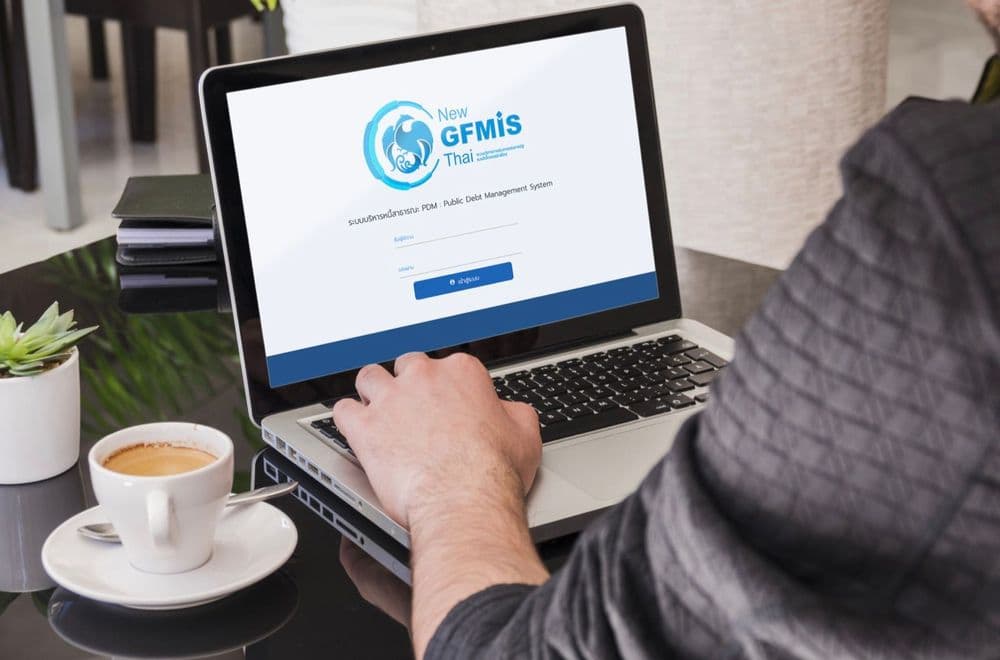
Public Debt Management Office, Ministry of Finance
฿9B+in contract value managed on the system we built
One open-source system for Thailand’s public debt, for the PDMO
- Enterprise Software Development
- Application Modernization
- Data Migration

We build the internal systems an organisation runs on: workflows that cross departments, approvals with real delegation rules, and audit trails that show who did what. We design them with the people who will use them every day.
Enterprise software development means building the internal systems an organisation depends on: multi-role workflows, approvals, records and reports, connected to the ERP, HR and identity systems already in place. It suits processes that no configurable product can express.
We were part of the delivery team for the Public Debt Management System at Thailand's Public Debt Management Office. We also built GMM Grammy's accounting report system and the Seller Centre and admin site for Biddee.
One process runs across several departments
Each department works in its own tool, and nobody can say who holds a request.
Permissions are all or nothing
Current tools cannot express who may see or approve what, so people share logins.
Audits take days of evidence gathering
Showing who did what, under whose authority, means collecting emails, forms and spreadsheets by hand.
The system has to last a decade
It must outlive staff and vendor changes, and your own team must be able to extend it.
Workflow and approval systems
Routing with limits by amount, delegation during leave, acting roles and escalation when a step is overdue.
Role-based access control
Permissions by unit, function and role, keeping the person who creates a request apart from the approver.
Audit trails you can search
Every action recorded with the user, the time and the authority they acted under.
ERP, HR and identity integration
Explicit, versioned interfaces, so a change on either side does not break the other.
Documentation and handover
Mainstream technologies, recorded architecture decisions and infrastructure-as-code, kept current so your team can take over at any point.
Every engagement runs through the same six-stage fitting process, from the first consultation to long-term care. The stages stay in the same order; how deep each one goes depends on the project.
See the full fitting processLong-running processes collect steps that exist only because an earlier system could not do something: a form filled in twice, an approval added after one incident years ago, a spreadsheet that reconciles two unconnected systems. If the new system copies them, the workarounds become permanent.
Before we design anything, we watch the work with the people who do it, then go through each step with your process owner and agree which ones stay.
Approval authority gets the same treatment. Limits change with the amount, someone acts for a manager on leave, and some exceptions are legitimate but written down nowhere. We agree these rules before implementation, so they do not first appear in user acceptance testing.
We then deliver one workflow at a time, running it beside the current process until it has been judged on real work, and roll it out unit by unit.







Engagements span build, integration and long-term support. Named with permission; clients under NDA are not listed.
Cost depends on how many workflows and roles are in scope, how complex the approval rules are, how many systems it must connect to, and how much data has to move across. We send a written estimate after a short scoping call. Public-sector estimates are built against the TOR.
The first workflow in production usually takes four to eight months. A full programme can run one to three years, delivered in stages that each work on their own. Before committing to dates, we go through the approval rules and the integrations, which is where schedules most often change.
Often, yes, and we will say so. If configuration and light integration close the gap, use the ERP. If closing it needs heavy customisation, you are building software anyway, with less control and a harder upgrade path, and a separate system connected to the ERP is usually cheaper to run.
Yes. We read the TOR in detail, raise anything unclear where the process allows, and price what remains open, since a fixed scope cannot be refined during delivery. MERCIL is registered with Thailand's Public Debt Management Office as an ICT consultant, No. 6745, Rating 1.
Each increment can be used on its own, so if priorities change, only the increment in progress is at risk. Late changes to a basic assumption, such as how approval authority is modelled, are expensive, so we raise those decisions early and record them.
Public Debt Management Office, Ministry of Finance
฿9B+in contract value managed on the system we built

Biddee
3 yrsbuilt and evolved by the same team
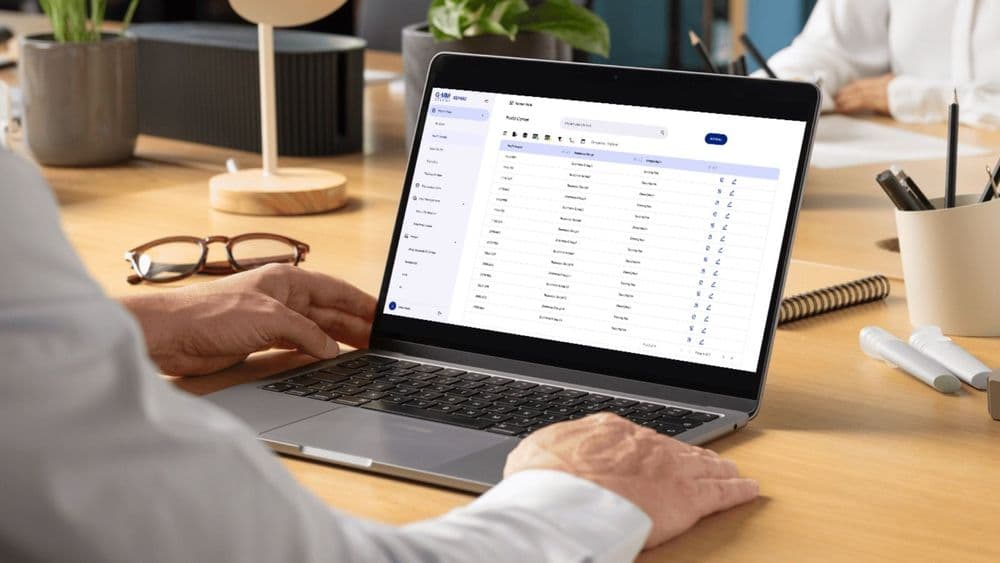
GMM Grammy
Next step
Tell us about the problem you are trying to solve. A senior person reads every inquiry and replies with our view of fit, scope and cost, including when another option would suit you better.
We use essential cookies to make this site work and, with your consent, Google Analytics and Hotjar session recordings to understand how it is used. Forms are hidden in recordings. Cookie policy